Living within the majestic canopy of the San Bernardino National Forest offers a lifestyle that few get to experience. From the quiet winters in Running Springs to the lakeside summers in Lake Arrowhead, the beauty of the mountains is undeniable. However, this environment comes with a significant responsibility: fire preparedness. For homeowners in communities like Blue Jay, Cedar Glen, and Twin Peaks, defensible space is not merely a suggestion; it is a critical component of property ownership and community safety.
Wildfire risk in Southern California mountains is influenced by several factors, including high fuel loads, steep topography, and the seasonal Santa Ana winds. Creating a defensible space around your home is the most effective way to improve the odds that your structure will survive a wildfire. This guide provides a deep dive into the specific zones of protection, the tools you need to maintain them, and the local requirements for staying compliant with California law.
Understanding the Science of Fire in a Forest Environment
Before picking up a rake or a chainsaw, it is important to understand how fire moves through a mountain community. Wildfires do not just move as a wall of flame. They often spread through radiant heat and, most dangerously, airborne embers. In the San Bernardino National Forest, embers can travel over a mile ahead of the actual fire front. These small, glowing coals can land in a pile of dry pine needles on a roof or a wooden deck and ignite a home long before the forest fire arrives.
Defensible space is designed to tackle all three threats: direct flame contact, radiant heat, and ember ignition. By managing the vegetation and materials around your home, you are essentially “starving” the fire of the fuel it needs to climb into the canopy or reach your siding.
Zone 0: The Ember-Resistant Zone (0 to 5 Feet)
The most recent standards from Cal Fire and local San Bernardino County ordinances emphasize the importance of Zone 0. This is the first five feet extending out from your home, including the area under decks and stairways. This zone is arguably the most critical because it is where wind-blown embers often collect.
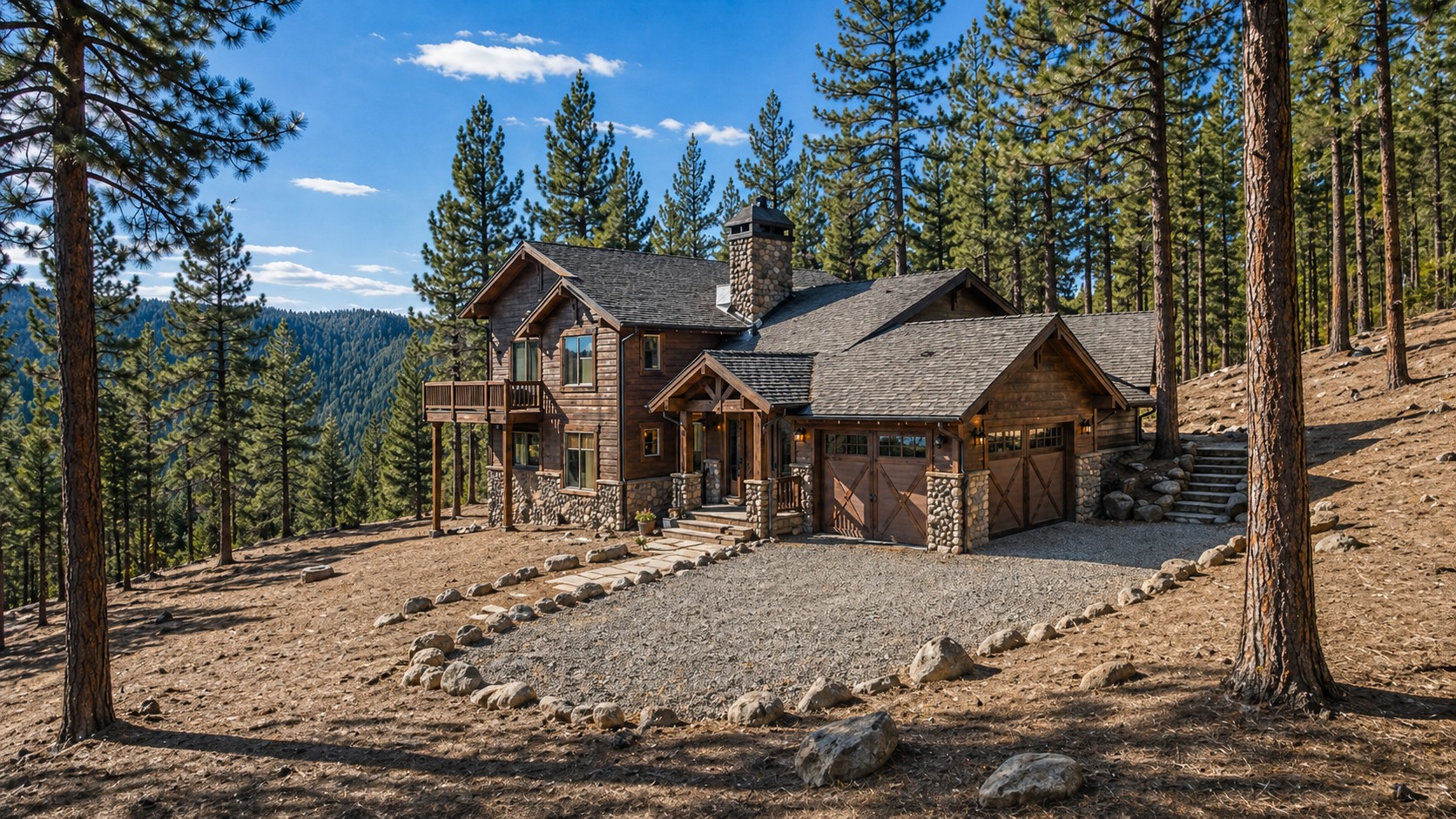
In this zone, the goal is to have zero combustible materials. If an ember lands here, there should be nothing for it to ignite. This means removing all organic mulch, wood chips, and dry pine needles. Replace these materials with non-combustible options such as decorative rock, gravel, or pavers.
Pay close attention to the base of your home. Any dry leaves or needles tucked against the foundation are a major risk. A high-powered leaf blower is the most effective tool for this task. It allows you to clear out tight corners and crevices where debris naturally accumulates.
Additionally, ensure that no branches are touching or hanging over your roof. In Zone 0, you should also remove any plants that are particularly oily or resinous, such as junipers or certain types of ornamental evergreens. These can burn with extreme intensity and provide a direct path for fire to reach your eaves.
Zone 1: The Lean, Clean, and Green Zone (5 to 30 Feet)
Zone 1 extends from the edge of Zone 0 out to 30 feet from your structures. The objective here is to create a “break” in the fuel. You want this area to be lean, meaning thin out the vegetation; clean, meaning remove all dead or dying material; and green, meaning keep your remaining plants healthy and hydrated.
In this zone, you must remove all “ladder fuels.” Ladder fuels are low-lying vegetation or low-hanging branches that allow a ground fire to climb up into the tree canopy. In the San Bernardino Mountains, this often means trimming the lower limbs of Jeffrey Pines and White Firs. Prune your trees so that the lowest branches are at least 6 to 10 feet off the ground. If you have smaller trees or shrubs beneath a larger tree, ensure there is significant vertical clearance between the top of the shrub and the bottom of the tree limbs.

A telescoping pole saw is an essential tool for this job. It allows you to safely trim branches from the ground without the need for a ladder, which can be dangerous on the uneven terrain common in Lake Arrowhead.
For larger limbs that require more power, a lightweight battery-powered chainsaw is ideal for homeowners. It provides the necessary torque to clear limbs quickly without the maintenance headaches of gas-powered engines.
Firewood storage is another critical factor in Zone 1. While it is convenient to keep your wood pile near the back door for those cold mountain nights, a wood pile is essentially a giant stack of fuel. Move all firewood at least 30 feet away from your home or any other structures like sheds or garages. If space is limited, consider a dedicated fire-resistant wood shed or cover.
Zone 2: The Reduced Fuel Zone (30 to 100 Feet)
Zone 2 is the area between 30 and 100 feet from your home. This is where you focus on horizontal spacing. In a dense forest environment, fire can jump from one tree crown to another with ease. By increasing the space between trees and shrubs, you can force a crown fire to drop back down to the ground, where it is much easier for firefighters to manage.
For trees in this zone, aim for a minimum of 10 feet between the edges of the canopies. On steeper slopes, which are very common in the San Bernardino Mountains, this spacing should be even greater because fire travels much faster uphill.
Thinning out thickets of young trees and removing invasive brush is a heavy task. A dedicated brush cutter or a high-end string trimmer with a metal blade attachment can save hours of manual labor. This tool allows you to clear large patches of overgrown “mountain misery” or other flammable ground covers.

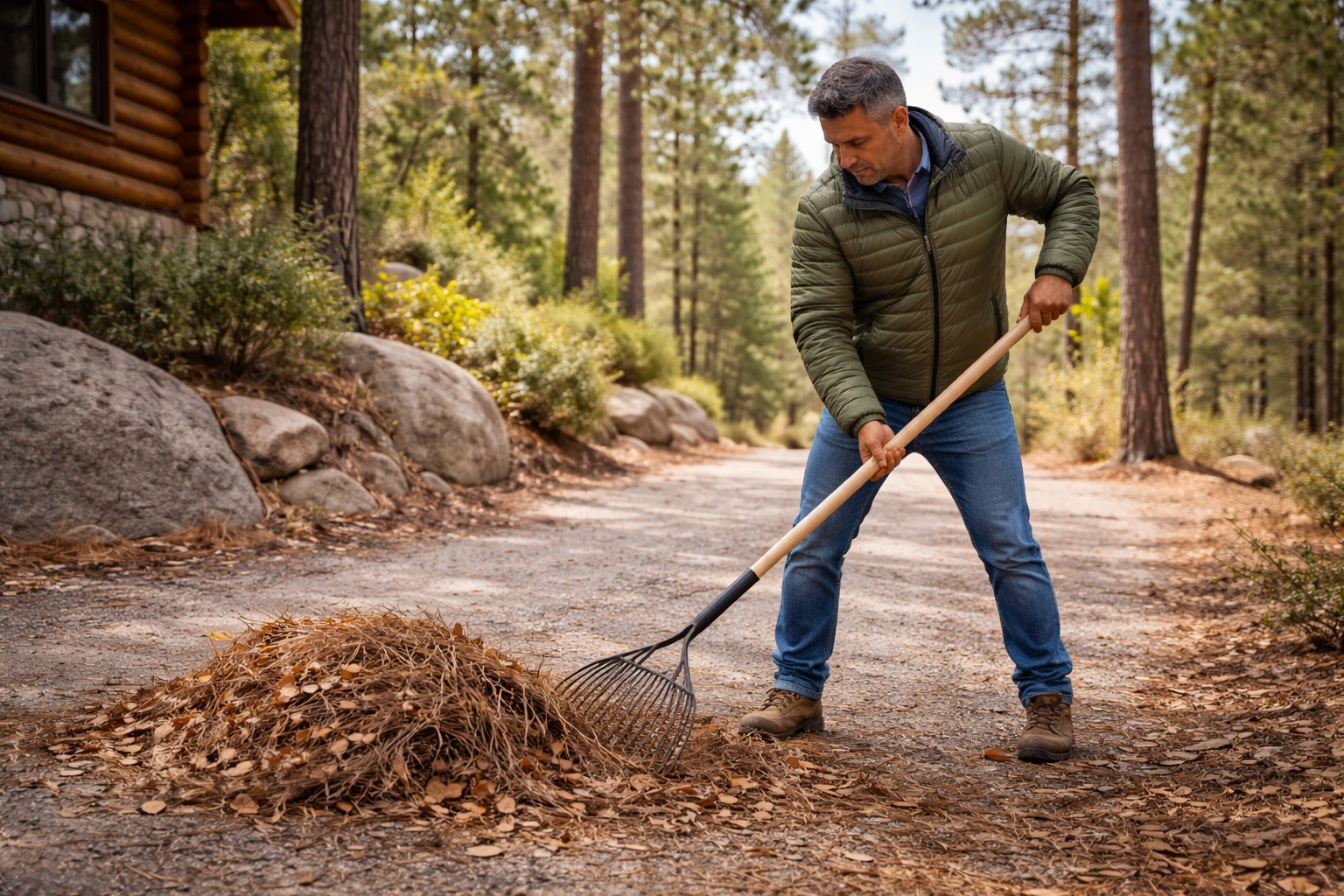
Keep this area clear of fallen branches and excessive pine needle build-up. While a thin layer of needles can help prevent soil erosion, anything over two or three inches becomes a significant fire hazard during the dry summer months. A heavy-duty landscape rake is perfect for gathering these materials into manageable piles for hauling away.
Hardening the Home: Beyond Vegetation
Defensible space is only one half of the equation. The other half is “home hardening,” which refers to the materials and construction of the house itself. Even the best yard maintenance cannot protect a home if the structure has vulnerabilities.
Your roof is the most vulnerable part of your house during a wildfire. In Lake Arrowhead, many older homes still have wood shake roofs, which are extremely flammable. If you have a wood roof, replacing it with a Class A rated material, such as composition shingles or metal, should be your top priority.
Gutters are another major collection point for embers. Pine needles can pack tightly into gutters, and when they dry out, they become highly flammable. When an ember lands in a clogged gutter, it can ignite the debris and spread the fire directly under the edge of your roof. Regular cleaning is mandatory. For those who prefer to stay off ladders, a gutter cleaning attachment for your leaf blower or a specialized gutter vacuum can be a lifesaver.
Vents are the “secret entrance” for fire. Standard attic and crawlspace vents often have large openings that allow embers to be sucked inside the home by the vacuum created by a passing fire. Upgrading to ember-resistant vents, which utilize fine mesh and heat-activated materials, is a smart investment that provides a high level of protection for a relatively low cost.
Driveway Access and Emergency Visibility
A critical part of defensible space that is often forgotten is the access point. If emergency vehicles cannot get to your home, they cannot defend it. Ensure your driveway has at least 13.5 feet of vertical clearance and 10 feet of horizontal clearance. This means trimming back any overhanging branches that would snag on a large fire engine.
Visibility is equally important. During a wildfire, smoke can make it nearly impossible for firefighters to see house numbers. Ensure your address is clearly marked with reflective numbers that are visible from the street in both directions.
The Maintenance Calendar: A Seasonal Approach
In the San Bernardino National Forest, defensible space is not a “set it and forget it” project. The environment is constantly changing. Pine needles fall year-round, and the heavy winter snows often break branches that become dry fuel in the spring.
Spring Maintenance
Once the snow melts, it is time for a major cleanup. This is when you should perform your heavy pruning and clear out all the dead wood that accumulated over the winter. Focus on clearing gutters and checking the health of your trees.
Summer Maintenance
As the heat rises, vegetation dries out. This is the time for frequent “mop-up” work. Use your leaf blower weekly to keep Zone 0 clear of new pine needle falls. Check your irrigation systems to ensure your “green zone” remains hydrated.
Fall Maintenance
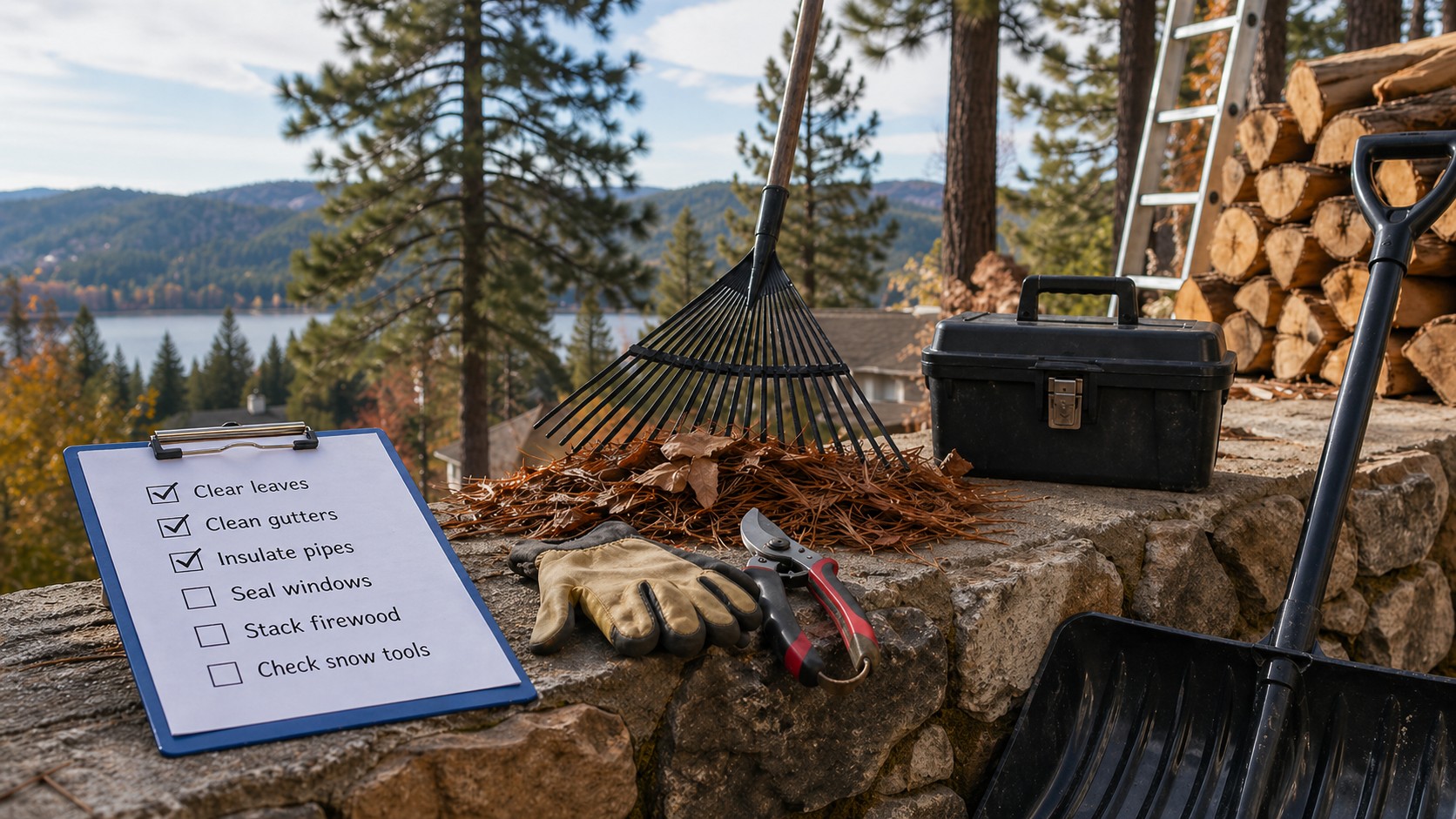
Before the first snow, do one last sweep of the property. Clear the roof and gutters again, as the winds often knock down a fresh layer of needles and leaves. Move any remaining firewood to its winter storage location at least 30 feet from the house.
Why Professional Assistance is Often Necessary
Maintaining a property in Lake Arrowhead or Crestline can be a daunting task. The terrain is often steep, the trees are massive, and the sheer volume of pine needles can be overwhelming for a single homeowner. This is especially true for second-home owners who may not be on the mountain every weekend.
Professional services like Hammer’s Mountain Services provide the expertise and the heavy equipment needed to handle large-scale fuel reduction. From professional tree thinning to large-scale brush removal and debris hauling, a local team understands the specific requirements of the San Bernardino County Fire Department. They can ensure your property is not only safe but also compliant with local inspections, which have become increasingly strict in recent years.
You’ll Thank Yourself Later For Creating Defensible Space Now
Creating defensible space is an act of community care. When you protect your home, you are also protecting your neighbors’ homes and providing a safer environment for the firefighters who put their lives on the line during a crisis. By following this checklist and staying consistent with your maintenance, you can enjoy the beauty of the San Bernardino Mountains with the peace of mind that comes from being prepared.
Whether you are doing the work yourself or hiring a professional team, start early. Fire season in Southern California is no longer a short window; it is a year-round reality. Take the steps today to ensure your mountain retreat is ready for tomorrow.